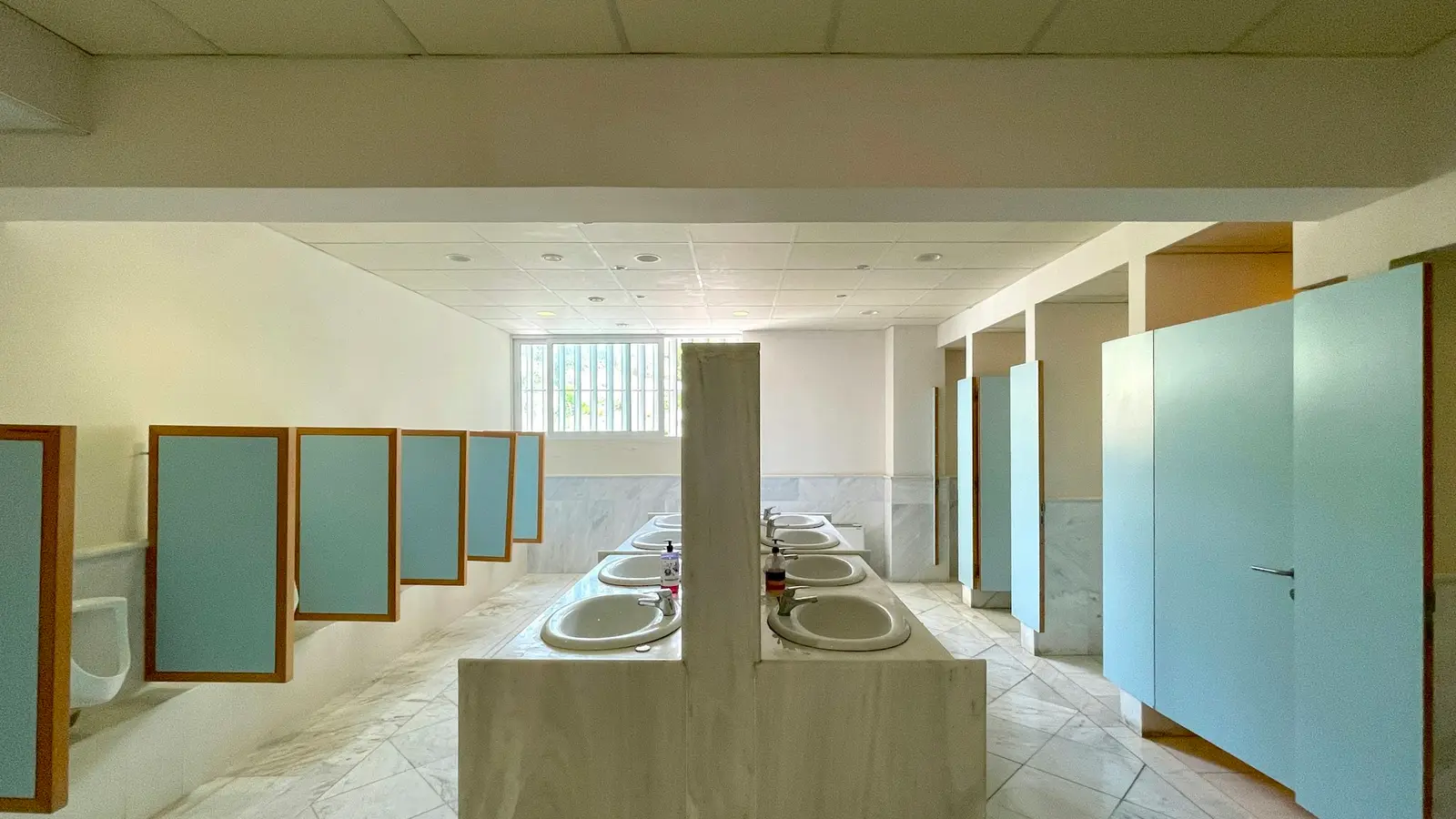
A signed register proves someone had a pen, not that the round happened. To prove a housekeeping round, record three things at the place itself: that someone was there (a QR scan at the door, with time and place stamped), what they found (an after-cleaning photo, checked as it's taken) and what they did about a problem (a photo and who it was reported to).
Why don't registers prove anything?
The hourly washroom register on the back of the door is one of the most signed and least trusted documents in facility management. It can be filled from the corridor, a few hours at a time, by someone who didn't go in. Clients know it, supervisors know it, and when there's a complaint the register can't settle it either way.
The problem isn't the attendants. It's that the register only asks for a signature, so a signature is all you get.
What does a provable round look like?
- Presence: the attendant scans a QR code at the door, which opens the round that's due there. The answer is stamped with the time and place.
- Result: an after-cleaning photo of the washroom or room, checked as it's taken for what the SOP says must be true: no litter, no stains, bins emptied, no standing water.
- Exceptions: a broken fitting or a missing supply is photographed and reported, with who it went to, so it can be closed rather than forgotten.
- Timing: each round has a due time, so a missed or late round shows up that hour, not in next month's client review.
Do you need new hardware?
No. QR codes can be printed and stuck at each door, room or asset, and staff use the Android phones they already carry. A scan is a fast way into what's due at that spot; how strict you are about the photo is a separate choice.
What should happen when a round fails?
Decide in advance, per check:
- Block the photo until the round is redone and a retake passes.
- Warn and ask for a reason, kept with the answer.
- Flag it for the supervisor and move on.
High-traffic washrooms and client-facing areas usually warrant the strict setting. Back-of-house areas often don't.
How do you show clients the evidence?
Keep every round with its photos, time and place, sorted by site, floor and date. In a client review, the question changes from "were the rounds done?" to "here are this floor's rounds last Tuesday". Rounds done on time, late and missed, by floor and hour, are the numbers a contract SLA is usually about.
How ZealMint does it
In ZealMint Operations AI, every room, zone or asset can have a QR code that opens what's due there, and each after-cleaning photo is checked as it's taken. The washroom template also reads the latest time on the door's cleaning card. See the housekeeping rounds use case and proof on the spot.
Questions
How do you verify a cleaning round was done?
Record presence (a QR scan at the location, stamped with time and place), the result (an after-cleaning photo checked against the standard) and any exception (photographed and reported).
Is a QR code enough on its own?
It shows someone was at the door. Pair it with an after-cleaning photo to show the washroom or room was actually cleaned.
Can staff reuse an old photo?
Not if photos come from the in-app camera and every one is stamped with the time and place.